General & Surgical Dermatology
Sun Damage Treatment in Tampa
Florida's intense year-round sun accelerates cumulative skin damage — from cosmetic sun spots and uneven texture to actinic keratoses, the precancerous lesions that can progress to squamous cell carcinoma. Dr. Sergay evaluates and treats the full spectrum of sun damage, from prevention to early intervention.

Dr. Sergay's Approach
From Sun Spots to Precancer — Caught Early, Treated Right
Sun damage exists on a spectrum. At the cosmetic end, it causes uneven skin tone, solar lentigines (sun spots), rough texture, and premature aging. Further along that spectrum are actinic keratoses (AKs) — scaly, rough patches caused by years of UV exposure that are considered precancerous. Left untreated, some AKs can progress to squamous cell carcinoma (SCC).
In Tampa and throughout Florida, cumulative UV exposure is among the highest in the country — making sun damage evaluation an essential part of routine dermatologic care. Dr. Sergay performs thorough skin exams using dermoscopy to identify concerning lesions early, distinguish AKs from benign sun spots, and determine when treatment is needed.
Treatment options range from in-office cryotherapy and topical field therapies to resurfacing lasers and chemical peels — chosen based on the number, location, and severity of lesions, as well as your skin type and goals.
Actinic Keratoses Are Precancerous
Approximately 5–10% of untreated actinic keratoses progress to squamous cell carcinoma over time. Early treatment eliminates this risk entirely. Learn about skin cancer at Sergay Dermatology.
Dermoscopy Evaluation
Spot the difference precisely
Same-Day Treatment
Cryo & biopsy at time of visit
The Full Spectrum
Types of Sun Damage
Sun damage presents in many forms — from purely cosmetic concerns to precancerous lesions that need prompt attention. Accurate diagnosis guides the right treatment choice.
Actinic Keratoses (AKs)
PrecancerousThe most clinically important form of sun damage. AKs are rough, scaly, sometimes tender patches on sun-exposed skin — most commonly the face, scalp, ears, neck, forearms, and hands. They develop from years of cumulative UV damage and represent a precancerous change in skin cells. Left untreated, a subset progresses to squamous cell carcinoma.
- Rough, scaly, or crusty surface
- Pink, red, or skin-colored
- May itch, sting, or bleed
- Often easier to feel than see
- Common on face, scalp, ears & hands
- 5–10% risk of SCC progression if untreated
Solar Lentigines (Sun Spots)
CosmeticFlat, well-defined brown spots caused by chronic UV exposure. They appear on the most sun-exposed areas — face, hands, shoulders, and décolletage. Unlike freckles, they don't fade in winter. While benign, they significantly affect skin tone and appearance, and can sometimes resemble melanoma — making professional evaluation important.
- Flat, well-defined brown patches
- Permanent — don't fade seasonally
- Common on face, hands & chest
- Benign but affect cosmetic appearance
- Can be confused with melanoma
- Responsive to lasers, peels & topicals
Photoaging & Skin Texture Changes
CumulativeLong-term UV exposure degrades collagen and elastin — causing fine lines, deep wrinkles, leathery or rough skin texture, enlarged pores, and uneven skin tone. This premature aging (photoaging) accounts for up to 90% of visible skin changes associated with aging. LaseMD Ultra and chemical peels are highly effective at reversing photoaging.
- Fine lines and deep wrinkles
- Rough, leathery texture
- Uneven skin tone & blotchiness
- Loss of skin firmness & elasticity
- Enlarged pores
- Accounts for ~90% of visible aging
Poikiloderma of Civatte
UV + HormonalA common sun-related condition causing a reddish-brown mottled discoloration on the sides of the neck and chest — often with visible blood vessels and skin thinning. It results from a combination of chronic sun exposure, hormonal factors, and sometimes photosensitizing cosmetics. Responds well to laser treatments.
- Reddish-brown mottled patches
- Neck and décolletage most affected
- Dilated blood vessels visible
- Skin thinning in affected areas
- More common in women
- Treatable with vascular laser
Who Is at Risk
Risk Factors for Sun Damage & Actinic Keratoses
In Florida, virtually everyone accumulates significant UV damage over time. Certain factors accelerate this process and increase the risk of developing precancerous lesions.
UV Exposure History
- Decades of unprotected sun exposure
- History of blistering sunburns
- Outdoor occupation or lifestyle
- Living in Florida or other high-UV climates
Skin Type
- Fair skin, light eyes & hair
- Skin that burns rather than tans
- Fitzpatrick skin types I and II
- Many freckles
Tanning History
- Indoor tanning bed use
- Intentional sunbathing
- Sun exposure without SPF protection
- UV lamp or phototherapy overexposure
Personal History
- Previous actinic keratoses
- Previous skin cancers (BCC, SCC)
- Family history of skin cancer
- Atypical moles (dysplastic nevi)
Immune Status
- Organ transplant recipients
- Long-term immunosuppressive therapy
- HIV infection
- Certain blood cancers (lymphoma)
Age
- Risk increases significantly after age 40
- Cumulative UV damage is lifelong
- AKs most common in adults 60+
- Earlier onset with tanning bed history
Tampa & Florida Residents: Florida has one of the highest skin cancer rates in the United States due to its year-round high UV index. Annual full-body skin exams are recommended for all Florida residents, regardless of skin type. Dr. Sergay conducts thorough dermoscopy-assisted exams to catch damage and precancerous lesions early.
Targeted Solutions
How Dr. Sergay Treats Sun Damage & AKs
Treatment is matched to the type and extent of your sun damage — from targeted cryotherapy for a single AK to full resurfacing for widespread photoaging.
Cryotherapy (Liquid Nitrogen)
Best for: Individual AKs
The most common in-office treatment for individual actinic keratoses. Liquid nitrogen is applied directly to the lesion, freezing and destroying the abnormal cells. Quick, effective, and can be done the same day as your skin exam. Best for discrete, well-defined AKs.
Topical Field Therapy
Best for: Multiple AKs / field cancerization
When AKs are numerous or spread over a large area ('field cancerization'), topical prescription medications treat the entire field of UV-damaged skin — including subclinical lesions not yet visible. Options include 5-fluorouracil (Efudex), imiquimod (Aldara), ingenol mebutate, and diclofenac gel.
LaseMD Ultra Laser
Best for: Photoaging, sun spots, texture
A non-ablative fractional laser that resurfaces UV-damaged skin, stimulates collagen, and addresses sun spots, texture, and fine lines simultaneously. Particularly effective for reversing photoaging on the face, neck, and décolletage, with minimal downtime.
Learn about LaseMD UltraChemical Peels
Best for: Sun spots, AKs, photoaging
Physician-grade chemical peels remove layers of UV-damaged skin and stimulate new cell growth. Effective for treating widespread sun spots, uneven tone, superficial AKs, and photoaging. Dr. Sergay selects peel depth based on your skin type and the severity of sun damage.
Learn about Chemical PeelsSurgical Treatment / Biopsy
Best for: Suspicious or thick AKs, possible SCC
When a lesion is suspicious for early squamous cell carcinoma or is uncertain on exam, a shave biopsy or excision may be performed. Dr. Sergay can perform same-day biopsies and surgical removal using dermoscopy to guide the decision — no second appointment needed.
Learn about skin cancer treatmentPhotodynamic Therapy (PDT)
Best for: Extensive field cancerization
A specialized treatment where a photosensitizing agent (aminolevulinic acid) is applied to the skin, then activated by blue or red light. PDT treats large areas of AKs and field cancerization while also improving overall skin texture. Ideal for patients with extensive damage.
58M+
Americans have actinic keratoses
5–10%
Risk of SCC if AKs are untreated
Same Day
Cryo & biopsy at time of exam
#1
Florida skin cancer rate in the US
Protect Your Investment
Sun Protection & Prevention
Treating existing sun damage is only half the battle. Preventing further damage is equally critical — especially in Tampa where UV exposure is year-round and intense. These habits protect your results and reduce future risk.
Daily SPF 50+ Sunscreen
- Apply broad-spectrum SPF 50+ every morning — rain or shine
- Mineral (zinc oxide / titanium dioxide) preferred, especially for melasma
- Reapply every 2 hours when outdoors
- Don't forget ears, neck, hands & décolletage
Protective Clothing & Hats
- UPF 50+ clothing blocks >98% of UV rays
- Wide-brimmed hat (3+ inches) for face, neck & ears
- UV-blocking sunglasses protect periorbital skin
- Long sleeves during peak UV hours outdoors
Avoid Peak UV Hours
- UV is strongest 10am–4pm — seek shade or stay indoors
- UV reflects off water, sand & concrete — shade isn't enough
- Cloud cover blocks only 20% of UV rays
- UV penetrates car and home windows (UVA)
Avoid Tanning Beds
- Tanning beds emit UV radiation up to 15× stronger than the sun
- Even a single tanning bed session increases skin cancer risk
- No such thing as a "safe" tan from UV exposure
- Self-tanners are a safe alternative for cosmetic color
Annual Skin Exams Are Essential in Florida
Even with perfect sun protection habits, existing UV damage can evolve. Dr. Sergay recommends annual full-body skin checks for all patients — and more frequent visits for those with a history of AKs or skin cancer. New or changing spots should be evaluated promptly.
Your Dermatologist
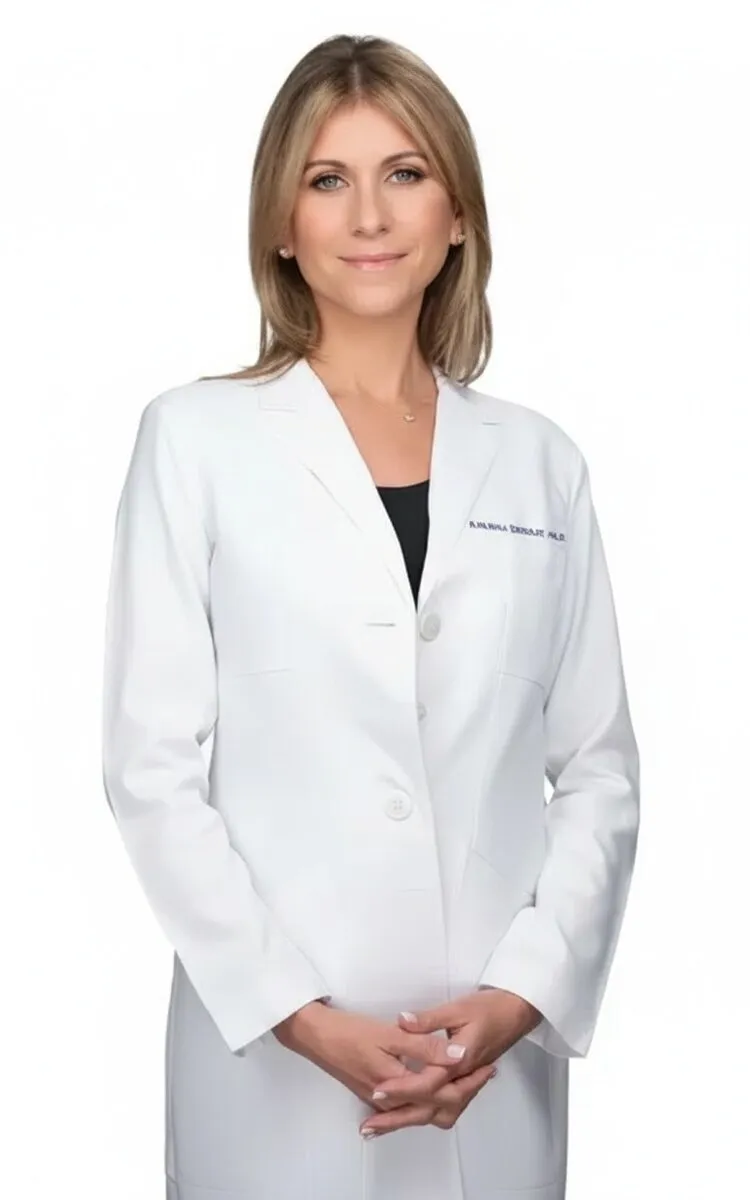
About Amanda Sergay, MD
Board Certified
American Board of Dermatology
Specialties
Medical · Surgical · Cosmetic
Location
South Tampa, FL
Board-Certified Dermatologist · Medical · Surgical · Cosmetic
Amanda Sergay, MD is a board-certified dermatologist committed to excellence in comprehensive dermatological care. Originally from the Tampa area, Dr. Sergay received her undergraduate degree from Emory University and earned her medical degree from the University of Miami Miller School of Medicine.
She completed her residency in dermatology at Mount Sinai St. Luke's-Roosevelt Hospital Center in New York City, where she served as Chief Resident during her final year. Her practice encompasses medical, surgical, and cosmetic dermatology, treating both adults and children.
Dr. Sergay has been named to Tampa Magazine's Top Docs Edition in 2019, 2020, 2021, 2022, 2023, 2024, 2025 and 2026, and was twice named to New York Magazine's New York Rising Star list.
Awards & Recognition
Tampa Magazine Top Docs
 20192020202120222023202420252026
Super Doctors

Emory University
Undergraduate
Univ. of Miami Miller
Medical Degree
Mount Sinai NYC
Residency · Chief Resident
Patient Reviews
What Our Patients Say
Real Google reviews from patients who trust Dr. Sergay with their skin health.
“After what felt like a never-ending search for the right doctor to help with my skin irritations, I finally found Dr. Sergay — and what a blessing! She's not only incredibly genuine, but she also took the time to explain everything in detail so I fully understood both my issue and the solution. It's easy to see why she's made such a respected name for herself here and in New York.”
Christin Hillis
13 reviews · 2 photos
“I am so fortunate to have found Dr. Sergay! She's so skilled and knowledgeable, and I feel comforted by her attention to detail. It is obvious that she truly cares about her patients!”
Marguerite Rogal
1 review
“Dr. Sergay is awesome! I am a new patient and very much appreciated her approach, thoughtfulness and attention to detail. Highly recommend!”
Chad Panton
Local Guide · 36 reviews · 2 photos
“Dr. Sergay is incredibly knowledgeable and very sweet! She's always attentive during each visit, and no matter the concern, she takes the time to understand the root of the issue and explain everything clearly. You can tell she truly cares about her patients!”
Lily Oliva
5 reviews
“Wonderful office, the Dr. listened to all my concerns and addressed each with good communication and ideas. My new Derm.”
Carol Gould
Local Guide · 21 reviews · 1 photo
“Dr. Sergay was just fabulous. Thorough for our skincare check and so informative. Highly recommend for anyone looking to get an established, yearly dermatologist for skin cancer checks.”
Iris Moore
9 reviews
Common Questions
Sun Damage & Actinic Keratosis FAQ
An actinic keratosis (AK) is a rough, scaly patch of skin caused by years of UV damage. It's considered a precancerous lesion — meaning it's not yet cancer, but it has the potential to develop into squamous cell carcinoma (SCC) if left untreated. Studies estimate that 5–10% of untreated AKs progress to SCC over time. The good news: treated early, AKs can be completely eliminated, preventing any cancer risk.
AKs are often easier to feel than to see — they have a rough, sandpaper-like texture on sun-damaged skin and may be pink, red, or skin-colored. They can look similar to eczema patches, warts, or in some cases early skin cancers. Self-diagnosis is unreliable. Dr. Sergay uses dermoscopy during every exam to precisely evaluate suspicious spots, and a same-day biopsy can be performed if needed to confirm the diagnosis.
Some AKs can spontaneously resolve, particularly if sun exposure is significantly reduced. However, they often recur, and you cannot predict which lesions will progress and which won't. The current medical standard is to treat all diagnosed AKs to eliminate the risk of progression to squamous cell carcinoma. Dr. Sergay will recommend the appropriate treatment based on the number and distribution of your lesions.
Cryotherapy involves a brief application of liquid nitrogen to the lesion using a spray device or cotton-tipped applicator. Most patients describe a cold, stinging, or burning sensation during the 5–10 second treatment, followed by mild throbbing that lasts a few minutes. The treated area may blister and crust over the following week before healing. The procedure is quick and well-tolerated — no numbing injection is usually needed.
Field cancerization refers to a large area of UV-damaged skin that contains numerous AKs — both visible and subclinical (not yet visible). Simply treating individual lesions misses the surrounding damaged skin, which can continue producing new AKs. Field therapy using topical medications (like 5-fluorouracil or imiquimod) or photodynamic therapy treats the entire UV-damaged field at once, eliminating both visible and subclinical lesions. Dr. Sergay will assess whether you need targeted or field treatment.
Cumulative UV exposure is the primary driver of basal cell carcinoma, squamous cell carcinoma, and melanoma — the three most common skin cancers. Actinic keratoses are a direct precursor to SCC. Extensive photoaging and field cancerization indicate a high lifetime UV burden, which correlates with increased cancer risk across all three types. Regular skin exams and early treatment of AKs are the best ways to intercept this progression.
Yes — to a significant degree. LaseMD Ultra laser treatments and physician-grade chemical peels can visibly reverse photoaging: improving skin texture, fading sun spots, stimulating new collagen, and producing a more even, youthful complexion. Topical retinoids and vitamin C also contribute meaningfully to long-term skin renewal. While cellular DNA damage from past UV exposure cannot be fully reversed, the visible and precancerous manifestations can be dramatically improved.
Patients with a history of AKs or skin cancer should typically be seen every 3–6 months rather than annually. This allows Dr. Sergay to monitor for new lesions, treat emerging AKs before they progress, and adjust maintenance therapy as needed. Between visits, monthly self-skin checks and strict daily sun protection are essential. The goal is to stay one step ahead of new damage.
Don't Wait on Sun Damage
Schedule a Sun Damage & Skin Check in Tampa
Living in Florida means your skin is under constant UV pressure. Whether you have rough spots that need evaluation, sun damage you want treated, or just want a thorough annual skin check — Dr. Sergay is here. Same-day cryotherapy and biopsy available.