General Dermatology
Nail Fungus Treatment in Tampa
Onychomycosis — fungal nail infection — affects millions of Americans, causing thickened, discolored, and brittle nails that are difficult to treat without medical guidance. Dr. Sergay offers prescription oral and topical therapies with proven efficacy to restore healthy nails.

Dr. Sergay's Approach
Understanding Nail Fungus
Onychomycosis is a fungal infection of the nail unit — most commonly toenails — caused by dermatophytes, yeasts, or non-dermatophyte molds. It affects up to 14% of the general population and becomes more common with age. The infection is often slow to develop and easy to overlook early on.
Symptoms include nail thickening, yellow-brown or white discoloration, brittleness, crumbling edges, and in some cases pain with shoes. Nail fungus doesn't resolve on its own and OTC treatments are largely ineffective — accurate diagnosis and prescription therapy are needed for meaningful clearance.
Before prescribing treatment, Dr. Sergay will confirm the diagnosis (nail changes from psoriasis or trauma can mimic fungus) and select the most appropriate therapy based on the number of nails involved, the degree of involvement, and your overall health profile.
Confirmed Diagnosis
Nail clipping or culture when needed
Prescription Treatment
Oral & topical options available
Treatment Options
How Dr. Sergay Treats Nail Fungus
Nail fungus requires prescription therapy. Treatment selection depends on the number and extent of affected nails, the organism type, and your health history.
Oral Terbinafine
Terbinafine (Lamisil) taken daily for 6 weeks (fingernails) or 12 weeks (toenails) is the gold standard oral treatment. Achieves complete cure in approximately 70–80% of cases. Requires baseline liver function monitoring. Most patients tolerate it very well.
Oral Itraconazole
Itraconazole can be taken as continuous daily therapy or as pulse dosing (1 week on, 3 weeks off) for 3–4 cycles. Effective for both dermatophyte and Candida nail infections. Considered when terbinafine is not suitable.
Prescription Topical Antifungals
Efinaconazole (Jublia) and tavaborole (Kerydin) are FDA-approved nail lacquers applied daily to affected nails. Best for mild-to-moderate cases without nail matrix involvement. Slower to work than oral therapy but avoids systemic side effects.
Nail Debridement
Trimming and filing the infected nail reduces fungal load and may improve penetration of topical agents. Dr. Sergay can perform in-office nail debridement as part of a comprehensive treatment plan, particularly for thick, crumbly nails.
Combination Therapy
Combining oral antifungals with daily topical application improves cure rates and reduces relapse compared to monotherapy. Recommended for patients with extensive involvement, slow-growing nails, or prior treatment failure.
Recurrence Prevention
Nail fungus has a high recurrence rate — up to 40% within 3 years. Dr. Sergay will advise on preventive measures: antifungal sprays or powders for shoes, breathable footwear, keeping nails dry, and treating athlete's foot promptly to prevent nail reinfection.
14%
Of adults affected by nail fungus
70–80%
Cure rate with oral terbinafine
3–6 mo
Time to see new nail growth
No OTC
Prescription therapy required for results
Your Dermatologist
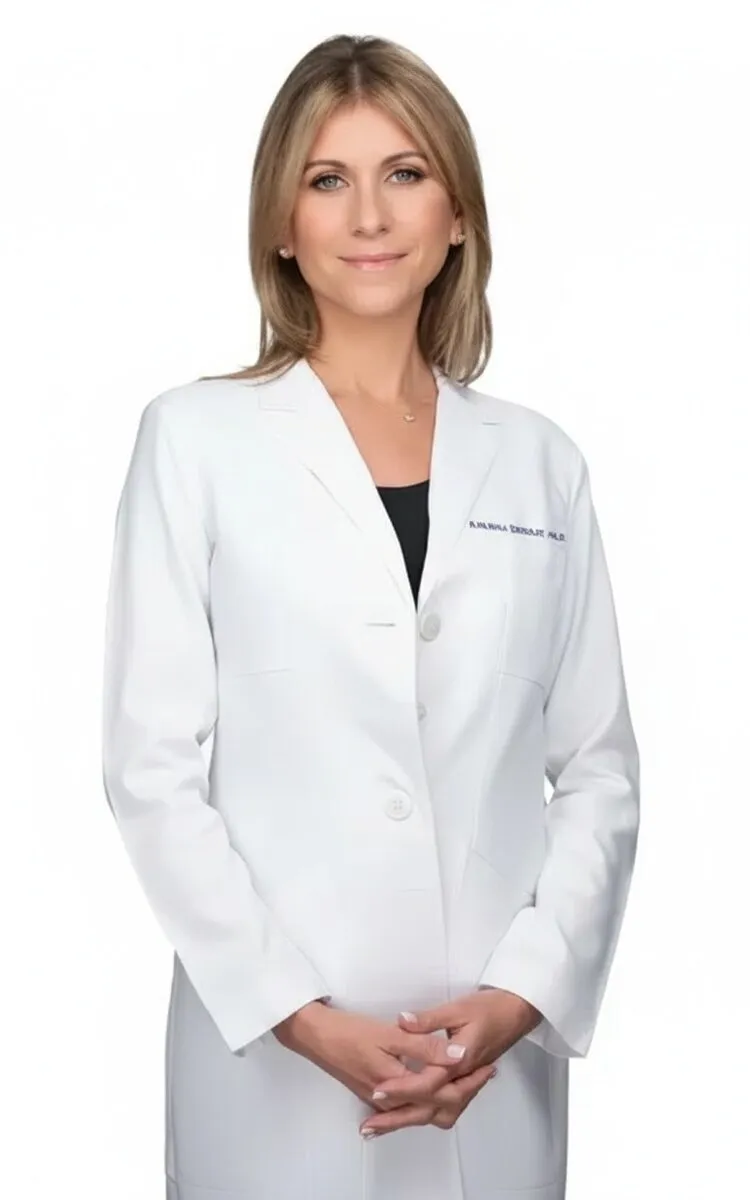
About Amanda Sergay, MD
Board Certified
American Board of Dermatology
Specialties
Medical · Surgical · Cosmetic
Location
South Tampa, FL
Board-Certified Dermatologist · Medical · Surgical · Cosmetic
Amanda Sergay, MD is a board-certified dermatologist committed to excellence in comprehensive dermatological care. Originally from the Tampa area, Dr. Sergay received her undergraduate degree from Emory University and earned her medical degree from the University of Miami Miller School of Medicine.
She completed her residency in dermatology at Mount Sinai St. Luke's-Roosevelt Hospital Center in New York City, where she served as Chief Resident during her final year. Her practice encompasses medical, surgical, and cosmetic dermatology, treating both adults and children.
Dr. Sergay has been named to Tampa Magazine's Top Docs Edition in 2019, 2020, 2021, 2022, 2023, 2024, 2025 and 2026, and was twice named to New York Magazine's New York Rising Star list.
Awards & Recognition
Tampa Magazine Top Docs
 20192020202120222023202420252026
Super Doctors

Emory University
Undergraduate
Univ. of Miami Miller
Medical Degree
Mount Sinai NYC
Residency · Chief Resident
Patient Reviews
What Our Patients Say
Real Google reviews from patients who trust Dr. Sergay with their skin health.
“After what felt like a never-ending search for the right doctor to help with my skin irritations, I finally found Dr. Sergay — and what a blessing! She's not only incredibly genuine, but she also took the time to explain everything in detail so I fully understood both my issue and the solution. It's easy to see why she's made such a respected name for herself here and in New York.”
Christin Hillis
13 reviews · 2 photos
“I am so fortunate to have found Dr. Sergay! She's so skilled and knowledgeable, and I feel comforted by her attention to detail. It is obvious that she truly cares about her patients!”
Marguerite Rogal
1 review
“Dr. Sergay is awesome! I am a new patient and very much appreciated her approach, thoughtfulness and attention to detail. Highly recommend!”
Chad Panton
Local Guide · 36 reviews · 2 photos
“Dr. Sergay is incredibly knowledgeable and very sweet! She's always attentive during each visit, and no matter the concern, she takes the time to understand the root of the issue and explain everything clearly. You can tell she truly cares about her patients!”
Lily Oliva
5 reviews
“Wonderful office, the Dr. listened to all my concerns and addressed each with good communication and ideas. My new Derm.”
Carol Gould
Local Guide · 21 reviews · 1 photo
“Dr. Sergay was just fabulous. Thorough for our skincare check and so informative. Highly recommend for anyone looking to get an established, yearly dermatologist for skin cancer checks.”
Iris Moore
9 reviews
Common Questions
Nail Fungus FAQ
Nail changes from fungus can look similar to nail psoriasis, nail trauma, or other nail disorders. Common features of fungus include thickening, crumbling, yellow-brown or white discoloration, and debris under the nail. A dermatologist can often diagnose it clinically, and a nail clipping can be sent to a lab for confirmation when needed.
Most OTC products (creams, sprays, nail polishes) don't penetrate the nail plate deeply enough to reach the fungal organisms living in the nail bed. The nail plate is a tough barrier. Prescription-strength topical lacquers and oral antifungals are specifically designed to achieve therapeutic concentrations at the site of infection.
Oral terbinafine is well-tolerated by the vast majority of patients. Serious liver toxicity is rare — estimated at less than 1 in 50,000 patients. Dr. Sergay typically checks baseline liver enzymes before prescribing, and monitors as appropriate. The risk-benefit profile is favorable for most healthy adults.
Oral terbinafine is taken for 6 weeks for fingernails and 12 weeks for toenails. You won't see clear nails immediately — it takes 6–12 months for a new toenail to fully grow out. You're treating the infection now; the cosmetic result appears gradually as healthy nail replaces the old.
Nail fungus is caused by dermatophytes — the same organisms responsible for athlete's foot (tinea pedis) and jock itch (tinea cruris). They can spread between sites on the body. Treating nail fungus also reduces the risk of recurring athlete's foot, and vice versa.
Yes, though it spreads most easily in warm, moist shared environments — gym locker rooms, public pools, and showers. Wearing sandals in public showers, not sharing nail tools, and keeping socks and shoes dry all reduce transmission risk.
Start Treatment
Schedule a Visit
Nail fungus typically does not clear on its own and usually requires treatment. Book with Dr. Sergay for a personalized treatment plan.