General Dermatology
Seborrheic Dermatitis Treatment
Seborrheic dermatitis causes stubborn flaking, redness, and itching on the scalp, face, and body. Often mistaken for psoriasis or eczema, it requires targeted treatment to control. Dr. Sergay creates personalized plans that reduce flares and maintain long-term skin health.
Dr. Sergay's Approach
Understanding Seborrheic Dermatitis
Seborrheic dermatitis is a common inflammatory skin condition that affects areas rich in sebaceous (oil) glands — the scalp, face (eyebrows, nose folds, ears), and sometimes the chest and back. It causes greasy scales, flaking, and redness that can be persistent and embarrassing.
The condition is linked to an overgrowth of Malassezia, a yeast that naturally lives on skin. While not contagious or dangerous, seborrheic dermatitis is chronic and tends to flare with stress, cold weather, illness, and hormonal changes. It's different from — but sometimes confused with — psoriasis and eczema.
Dr. Sergay will evaluate the distribution and pattern of your skin findings, confirm the diagnosis, and build a maintenance routine that keeps seborrheic dermatitis under control long-term — not just during flares.
Accurate Diagnosis
Distinguish from psoriasis & eczema
Long-Term Control
Maintenance strategy, not just flare care
Where It Appears
Affected Areas & Presentations
Seborrheic dermatitis can appear in multiple locations simultaneously. Treatment approach varies by site.
Scalp
Most Common- Ranges from fine dandruff to thick, adherent scales
- Itching, often worse in winter months
- Cradle cap is the infant equivalent
- Can affect the hairline, behind ears, and nape of neck
Face
Very Common- Eyebrows, brow ridge, and eyelid margins (blepharitis)
- Nasolabial folds (sides of nose)
- External ear canals and behind ears
- Redness and greasy yellow-white scales
Chest & Back
Less Common- Petaloid (petal-shaped) scaling on central chest
- Interscapular back involvement
- More common in men and in severe cases
- Often coincides with significant scalp involvement
Infants (Cradle Cap)
Pediatric Form- Thick, yellowish, waxy scales on scalp
- Usually appears in first weeks of life
- Often resolves by 12 months without treatment
- Gentle medicated shampoo may speed resolution
Treatment Options
How Dr. Sergay Treats Seborrheic Dermatitis
Treatment combines antifungal agents to address the yeast overgrowth with anti-inflammatory therapies to reduce redness and scaling. The goal is not just clearance but sustained remission.
Antifungal Shampoos
Ketoconazole, selenium sulfide, and zinc pyrithione shampoos reduce Malassezia yeast overgrowth on the scalp. Used 2–3x per week during flares, then maintained weekly. Over-the-counter options are available, but prescription-strength formulations offer faster, more reliable results.
Topical Antifungal Creams
Ketoconazole 2% cream or ciclopirox cream applied to facial and body areas clears scales and redness quickly. Safe for use on the face, nasolabial folds, and behind the ears with proper guidance on frequency and duration.
Low-Potency Topical Steroids
Mild corticosteroid creams or solutions (hydrocortisone, desonide) reduce inflammation and itch during active flares. Used sparingly and short-term on the face to avoid skin thinning. Often combined with an antifungal for a synergistic effect.
Calcineurin Inhibitors
Tacrolimus ointment or pimecrolimus cream are non-steroidal alternatives ideal for the face and skin folds. Particularly useful for maintenance therapy where ongoing steroid use would be inappropriate. Reduce inflammation without the risk of skin thinning.
Oral Antifungals
For widespread or treatment-resistant seborrheic dermatitis, short courses of oral antifungal medications (itraconazole, fluconazole) can provide rapid improvement. Reserved for cases not responding adequately to topical treatments.
Maintenance Regimen
Because seborrheic dermatitis is a chronic condition, a maintenance routine is essential to prevent relapse. Dr. Sergay will design a sustainable schedule — often once or twice weekly antifungal use — to keep the condition under control between flares.
Your Dermatologist
About Amanda Sergay, MD
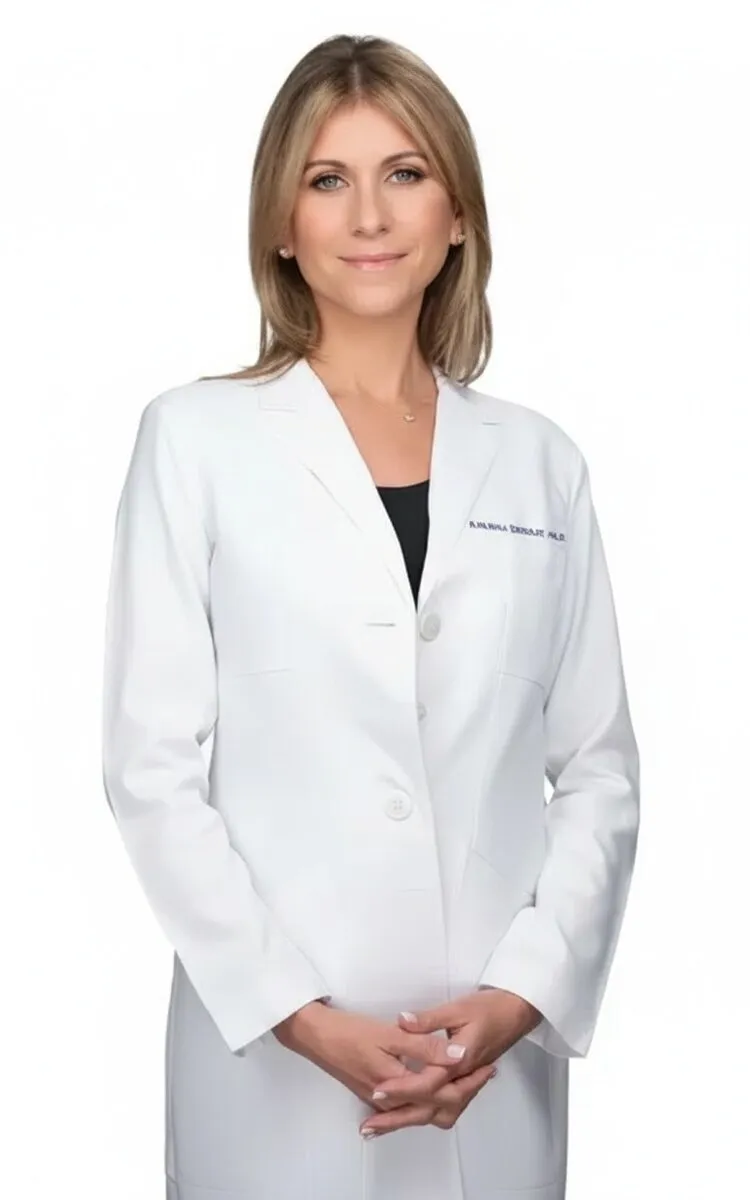
Board Certified
American Board of Dermatology
Specialties
Medical · Surgical · Cosmetic
Location
South Tampa, FL
Board-Certified Dermatologist · Medical · Surgical · Cosmetic
Amanda Sergay, MD is a board-certified dermatologist committed to excellence in comprehensive dermatological care. Originally from the Tampa area, Dr. Sergay received her undergraduate degree from Emory University and earned her medical degree from the University of Miami Miller School of Medicine.
She completed her residency in dermatology at Mount Sinai St. Luke's-Roosevelt Hospital Center in New York City, where she served as Chief Resident during her final year. Her practice encompasses medical, surgical, and cosmetic dermatology, treating both adults and children.
Dr. Sergay has been named to Tampa Magazine's Top Docs Edition in 2019, 2020, 2021, 2022, 2023, 2024, 2025 and 2026, and was twice named to New York Magazine's New York Rising Star list.
Awards & Recognition
Tampa Magazine Top Docs
 20192020202120222023202420252026
Super Doctors

Emory University
Undergraduate
Univ. of Miami Miller
Medical Degree
Mount Sinai NYC
Residency · Chief Resident
Patient Reviews
What Our Patients Say
Real Google reviews from patients who trust Dr. Sergay with their skin health.
“After what felt like a never-ending search for the right doctor to help with my skin irritations, I finally found Dr. Sergay — and what a blessing! She's not only incredibly genuine, but she also took the time to explain everything in detail so I fully understood both my issue and the solution. It's easy to see why she's made such a respected name for herself here and in New York.”
Christin Hillis
13 reviews · 2 photos
“I am so fortunate to have found Dr. Sergay! She's so skilled and knowledgeable, and I feel comforted by her attention to detail. It is obvious that she truly cares about her patients!”
Marguerite Rogal
1 review
“Dr. Sergay is awesome! I am a new patient and very much appreciated her approach, thoughtfulness and attention to detail. Highly recommend!”
Chad Panton
Local Guide · 36 reviews · 2 photos
“Dr. Sergay is incredibly knowledgeable and very sweet! She's always attentive during each visit, and no matter the concern, she takes the time to understand the root of the issue and explain everything clearly. You can tell she truly cares about her patients!”
Lily Oliva
5 reviews
“Wonderful office, the Dr. listened to all my concerns and addressed each with good communication and ideas. My new Derm.”
Carol Gould
Local Guide · 21 reviews · 1 photo
“Dr. Sergay was just fabulous. Thorough for our skincare check and so informative. Highly recommend for anyone looking to get an established, yearly dermatologist for skin cancer checks.”
Iris Moore
9 reviews
Common Questions
Seborrheic Dermatitis FAQ
Dandruff is actually a mild form of seborrheic dermatitis limited to the scalp. The term 'seborrheic dermatitis' is used when inflammation extends beyond the scalp to the face, ears, or body. Both involve Malassezia yeast overgrowth, but seborrheic dermatitis tends to be more extensive and requires more targeted treatment.
No — seborrheic dermatitis is not contagious. It's caused by an inflammatory response to a yeast that normally lives on everyone's skin, not by an external infection. You cannot pass it to others through contact.
Seborrheic dermatitis is a chronic condition without a permanent cure. The underlying tendency for Malassezia overgrowth persists, and the condition is prone to flaring with stress, illness, hormonal changes, and seasonal shifts. The goal of treatment is long-term management, not a one-time cure.
Both conditions cause scaling and redness and can affect the scalp, but they differ in several ways. Psoriasis scales are usually thicker, silvery, and more sharply defined, while seborrheic dermatitis scales tend to be greasier and more yellowish. Psoriasis can affect elbows, knees, and nails, while seborrheic dermatitis is more common in the nasolabial folds and ears. A dermatologist can distinguish between them with a clinical exam.
Seborrheic dermatitis itself doesn't directly cause permanent hair loss. However, severe scaling and itching can lead to inflammation that temporarily affects hair growth, and vigorous scratching can cause hair breakage. Treating the underlying dermatitis usually allows the hair to recover.
Evidence is limited but some patients notice worsening with high-sugar diets, alcohol, or dairy. A generally anti-inflammatory diet may help reduce flare frequency, but food changes alone are rarely sufficient to control seborrheic dermatitis without topical treatment.
Yes — OTC shampoos containing zinc pyrithione, selenium sulfide, or ketoconazole 1% can help maintain control. However, if your condition involves the face, is resistant to OTC products, or has features that make it difficult to distinguish from psoriasis or eczema, a dermatology evaluation is strongly recommended.
Get Control
Tired of the Flaking & Redness?
Seborrheic dermatitis is very treatable. Dr. Sergay will confirm your diagnosis and build a routine that gets it under control — and keeps it that way.